2025-12-12
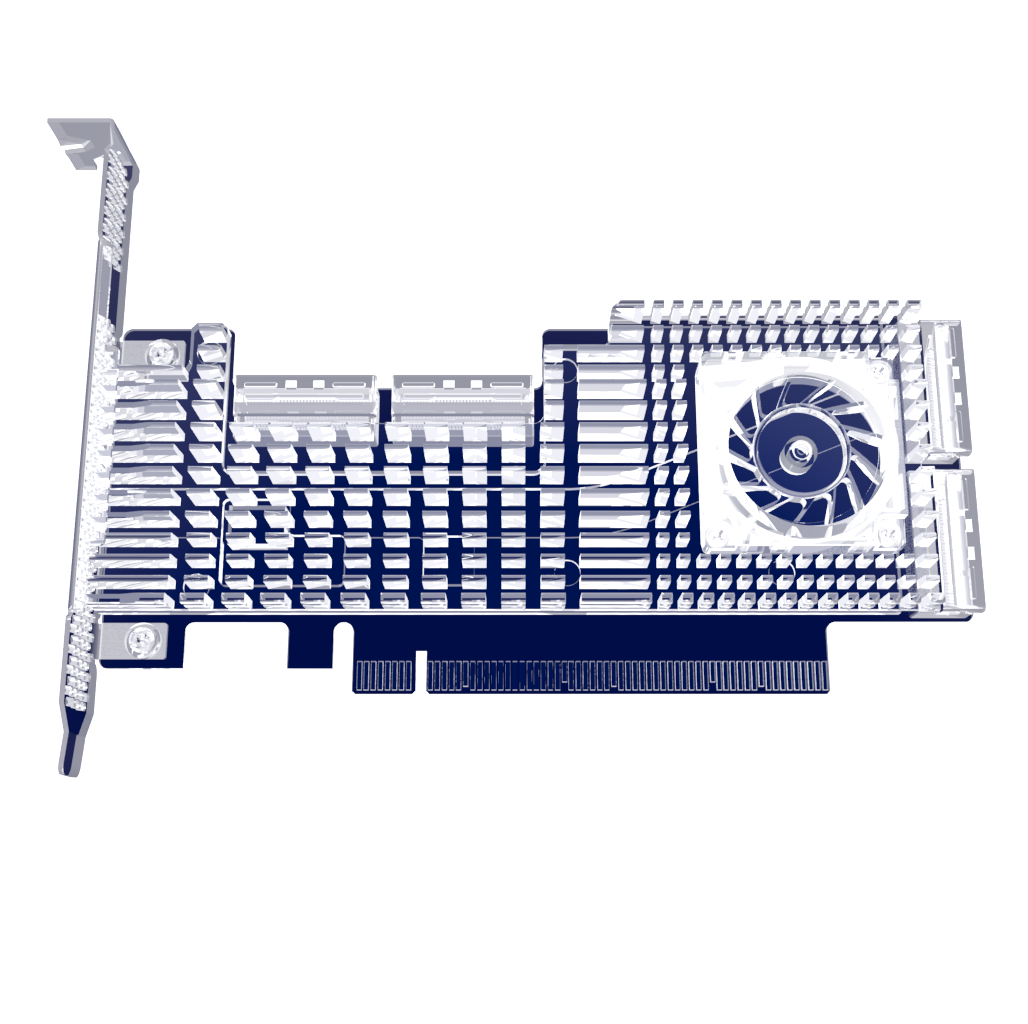
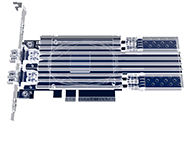
The LRES6080PF-4SFP28 time synchronization card is designed to meet O-RAN's LLS-C1 and LLS-C3 requirements (boundary clock and transparent clock operation modes). Through high-precision time synchronization capabilities, it addresses real-time demands, efficient data transmission, collaboration and synchronization, measurement, and monitoring. LLS-C2, and LLS-C3 (operating modes for boundary clocks and transparent clocks) requirements. Its high-precision time synchronization capabilities deliver significant advantages in real-time requirements, efficient data transmission, collaboration and synchronization, measurement, and monitoring. As 5G networks are widely deployed, these time synchronization technologies will play a pivotal role in shaping the future of communication infrastructure.
The Dependence of 5G Network Architecture on Synchronization Accuracy
The 5G network employs Time Division Duplex (TDD) technology, requiring strict control of time deviation between base stations within ±3μs. This fundamental requirement prevents interference between uplink and downlink time slots, ensuring communication quality. However, as network functionalities expand, time synchronization accuracy requirements exhibit a tiered progression:
• Basic services require base station air interface timing errors controlled within ±1.5μs
• 5G NR cooperative services demand OFDM symbol-level time alignment with ±65ns precision
• IoT services like indoor positioning require even higher ±10ns accuracy
The 5G network introduces a novel RAN architecture, decomposing the baseband unit (BBU) into a centralized unit (CU), distributed unit (DU), and radio unit (RU). Regardless of the distance between CU and DU, synchronization across the fronthaul network is critical for RAN functionality. This decomposed architecture employs enhanced common public radio interface (eCPRI) to connect DU and RU, achieving synchronization through PTP and SyncE.
Time Coherence Between Data Centers and Edge Nodes
As a key technology in the 5G era, edge computing shifts computational power to the network edge to meet millisecond-level latency requirements. In this scenario, time coherence between edge nodes and data centers is critical.
High-precision time synchronization employs the PTP protocol to achieve nanosecond-level synchronization between edge nodes and terminal devices, ensuring temporal consistency across multi-source data. Within the data center, sub-microsecond accuracy is achieved through hardware-based timestamping, maintaining stability even under CPU and network load.
Key Features and Protocol Support of 25G Time Synchronization Cards
With their advanced technical capabilities, 25G time synchronization cards are emerging as critical components in 5G network infrastructure. These cards deliver nanosecond-level precise time synchronization across entire networks, meeting the stringent requirements of 5G fronthaul networks.
Support for 1588v2 PTP and SyncE Protocols
The 25G time synchronization card simultaneously supports both the IEEE 1588v2 Precision Time Protocol (PTP) and Synchronous Ethernet (SyncE), forming a robust hybrid synchronization solution. Through this combination, SyncE provides frequency synchronization at the physical layer, ensuring network nodes operate at the same frequency, while PTP synchronizes phase and time information across packet-switched networks. This hybrid mode significantly enhances synchronization accuracy, extends the number of supported network hops, and achieves clock synchronization at the tens-of-nanosecond level.
Compared to PTP-only solutions, the hybrid synchronization mode offers higher reliability. If PTP functionality fails and the time signal is lost, SyncE remains operational. Devices maintain frequency synch ronization, with time deviation controlled within acceptable limits.
Integrated GNSS Module and External Clock Input
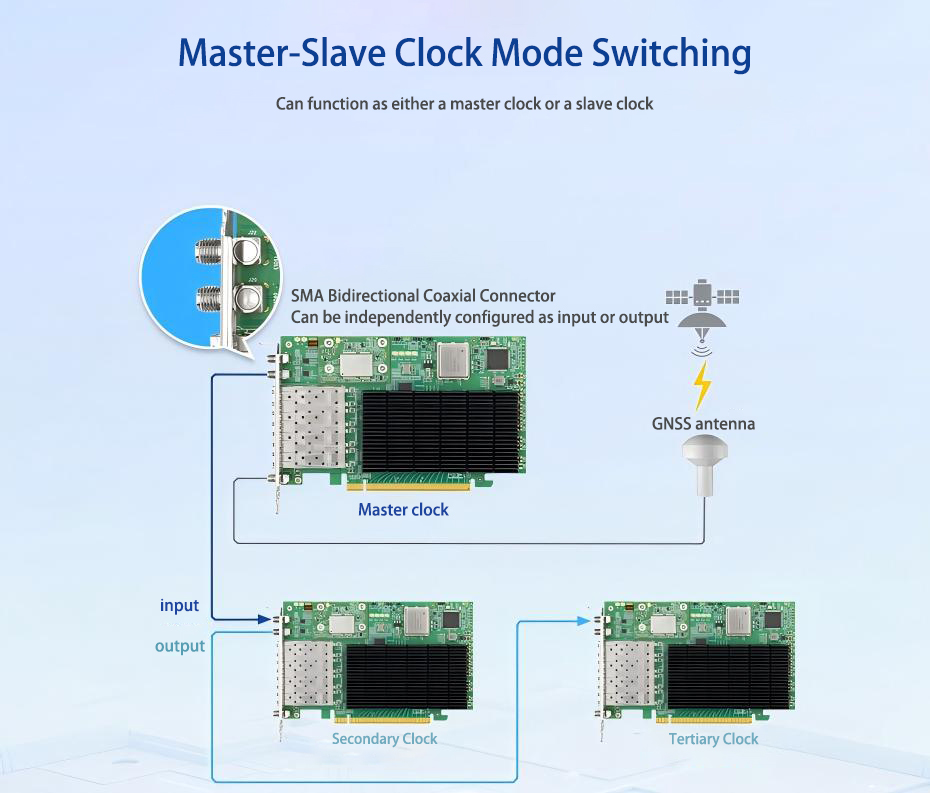
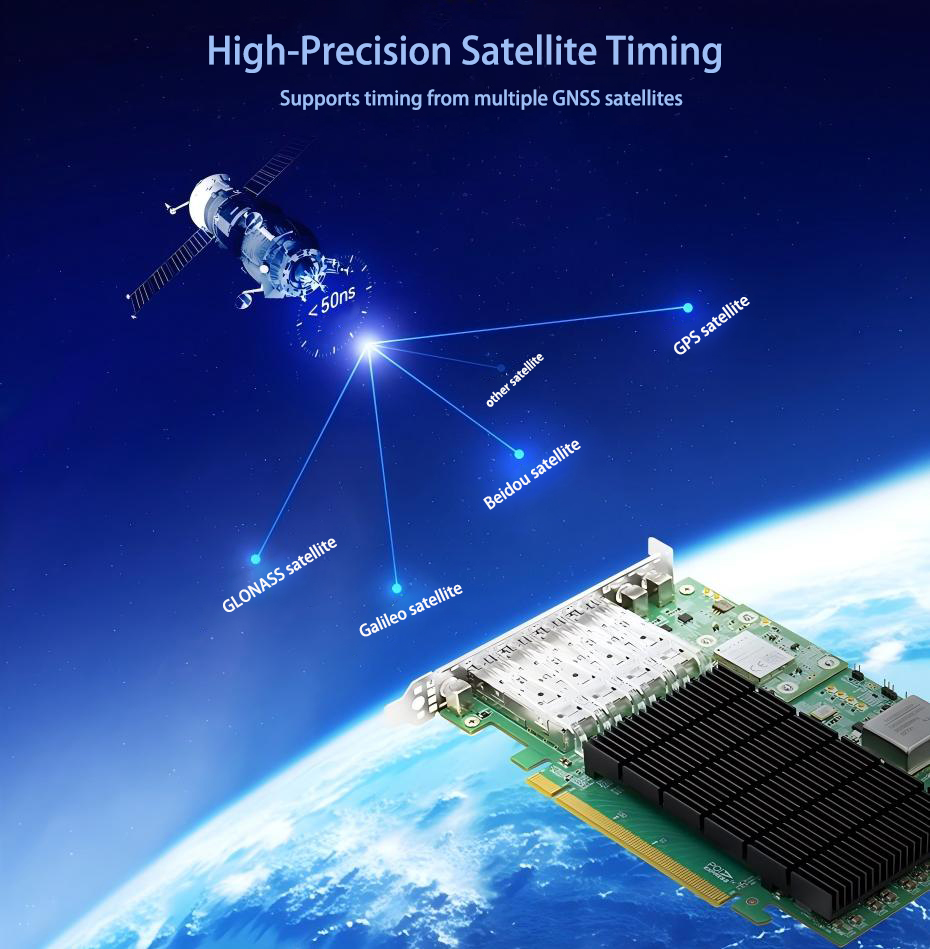
The 25G time synchronization card integrates a GNSS receiver module, utilizing an SMA female connector to receive signals from global navigation satellite systems. It supports multiple satellite positioning systems including GPS and BeiDou. Additionally, the card can synchronize host systems via 1PPS (1-pulse-per-second) and 10MHz external clock sources.
The time synchronization card provides PPS/TOD interfaces. These diverse clock input options ensure flexibility across various deployment environments.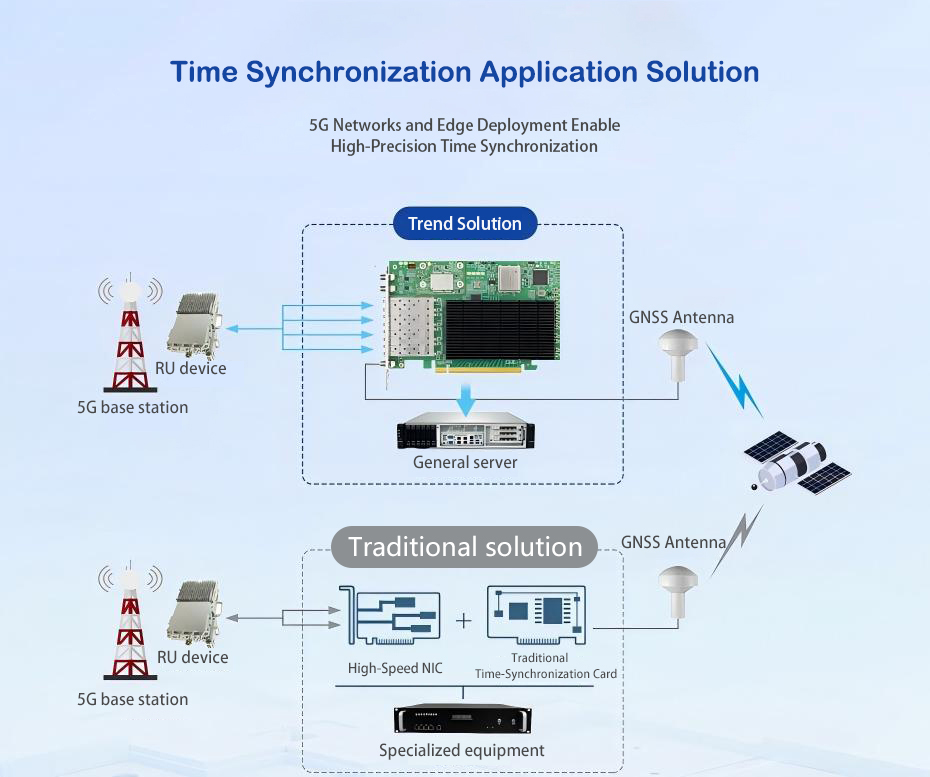
Typical Application Scenarios: From 5G RAN to Industrial Control
25G time synchronization cards demonstrate significant application value across diverse scenarios, from infrastructure to industrial control. These devices are becoming critical components for precise time delivery in the 5G era.
1.Applications in 5G Base Stations and Front-haul Networks
The Open RAN architecture divides the radio access network into Remote Radio Units (RU), front-haul switches, and Distributed Units (DU). Information transmission between these components relies on enhanced Common Public Radio Interface (eCPRI), demanding precise synchronization to prevent packet loss and network disruptions. Unlike previous generations, 5G imposes stricter time synchronization requirements. When deploying more small cells, interference and degraded RF performance occur if they operate on different reference clocks. Timing issues can cause handover failures, data corruption, and reduced throughput. The 25G time synchronization card meets O-RAN's LLS-C1, LLS-C2, and LLS-C3 requirements by supporting both boundary clock and transparent clock operating modes.
2.Time Synchronization Requirements for Edge Computing Nodes
Edge computing applications fall into two categories: local coverage and network-wide coverage. Local coverage applications require edge node access distances under 30 kilometers with sub-5 millisecond latency. In scenarios like smart cities, the “cloud-edge-device tripartite collaborative computing” spanning data collection, perception, and application layers imposes stringent timing synchronization demands. Absolute time synchronization methods for 5G wireless edge devices ensure synchronized collaboration among industrial equipment like sensors and actuators, compensating for phase and frequency deviations in local terminal clocks.
3.Deployment in Industrial Automation and Measurement Systems
Industrial applications demand equipment time synchronization accuracy below 1 microsecond. In high-speed mobility scenarios, power systems, and industrial internet applications, different segments require varying levels of time synchronization precision. For instance, power system applications such as traveling wave fault location, synchronous phasor measurement, and lightning strike location require synchronization accuracy within 1 microsecond. In intelligent transportation, traffic signal control, vehicle positioning, and tracking demand high-precision time synchronization to ensure system reliability and data accuracy. Through 25G time synchronization cards, robots, sensors, and controllers on production lines can operate in concert under a unified time reference, enhancing manufacturing efficiency.
4.Deployment and Compatibility: Selection and Integration
Selecting a time synchronization card suitable for 5G network environments requires consideration of multiple critical factors, including system compatibility, interface standards, and network architecture requirements.
5.Multi-port configurations for network architecture adaptability
Premium 25G time synchronization cards adapt to diverse network architecture requirements. Support for cascading up to 12 25G interfaces provides configuration flexibility, ensuring device applicability within 5G RAN fronthaul networks by enabling direct connection to multiple Remote Radio Units (RRUs). As operations scale, expandability becomes critical—devices with abundant port resources integrate more seamlessly into new nodes, meeting growing time synchronization demands.
Conclusion
In summary, as an indispensable component of 5G network infrastructure, the 25G time synchronization card meets the stringent demands of modern communication networks by delivering nanosecond-level precise time synchronization capabilities. With the comprehensive commercial deployment of 5G technology, microsecond-level time synchronization has become a critical factor in ensuring network performance. High-precision time synchronization not only resolves the synchronization accuracy issues of TDD carriers but also provides a stable and reliable time reference for the fronthaul network under the O-RAN architecture.
Undoubtedly, the 25G time synchronization card significantly enhances synchronization accuracy and reliability by supporting multiple protocols including IEEE 1588 PTP, SyncE, and GNSS. This hybrid synchronization mode excels in both frequency and phase synchronization, maintaining clock synchronization accuracy within tens of nanoseconds even under heavy network loads. Consequently, both inter-base station coordinated transmission and data processing at edge computing nodes can operate efficiently under a unified time reference.
Finally, the standardized PCIe interface design and multi-port configuration grant the 25G time synchronization card excellent compatibility and scalability. Support for multiple operating systems further facilitates deployment across diverse network environments. While microsecond and even nanosecond-level synchronization accuracy is currently achievable, future demands for timing precision will intensify with 6G technology development and quantum communication advancements. Regardless, the 25G time synchronization card will undoubtedly continue playing a pivotal role in building next-generation communication network infrastructure.