2026-03-27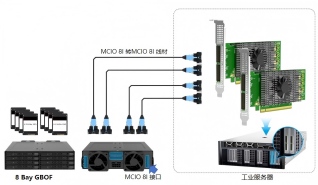
Autonomous driving road tests generate massive amounts of sensor data. Traditional storage solutions require the vehicle to stop for hard drive replacement, which seriously impairs test efficiency. This paper details a U.2 expansion card solution based on PCIe Switch technology, which enables hard drive hot-swapping without stopping the vehicle through dedicated design, providing an efficient and reliable infrastructure for intelligent driving data storage.
With the rapid development of L3/L4 level autonomous driving technology, road test vehicles need to collect and process massive data every day. Taking the test fleet of a certain company as an example, 15 road test vehicles operate simultaneously, each equipped with multiple LiDARs, high-definition cameras and millimeter-wave radars, generating dozens of terabytes of data per day.
However, traditional data storage solutions have three major pain points:
· Insufficient storage capacity: The capacity of a single SSD is limited, and continuous collection by high-resolution sensors leads to rapid exhaustion of storage space.
· Test interruption due to hard drive replacement: Traditional solutions require the vehicle to stop and shut down for storage medium replacement, interrupting the continuous test process.
· Limited data transmission bandwidth: On-board networks cannot meet the real-time backhaul requirements of massive data.
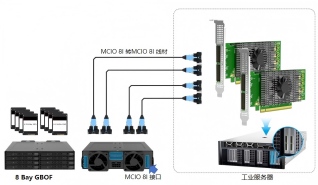
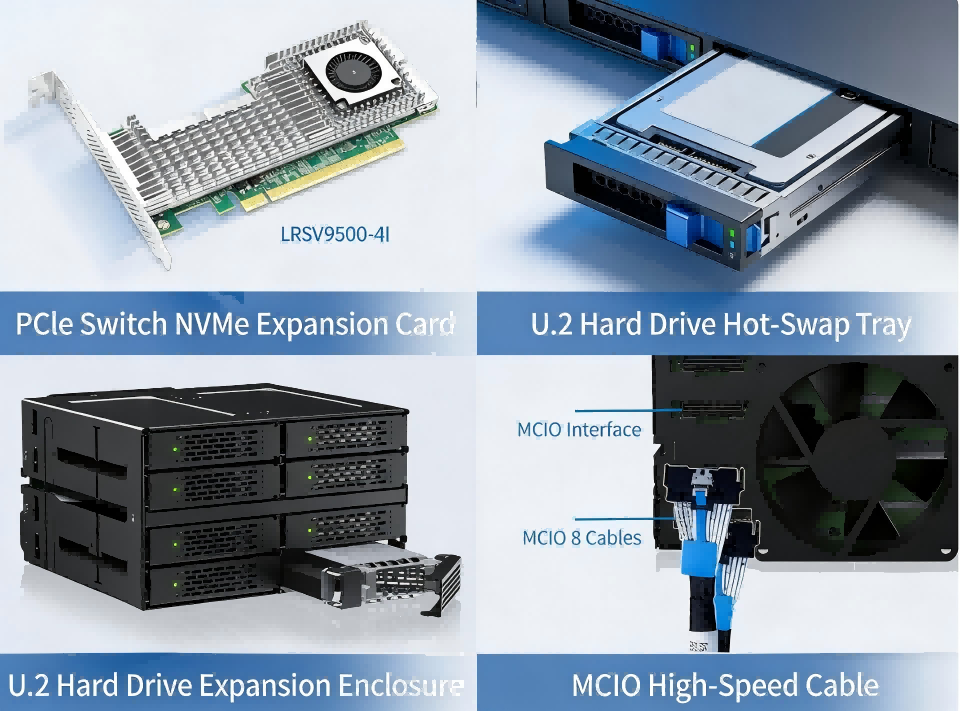
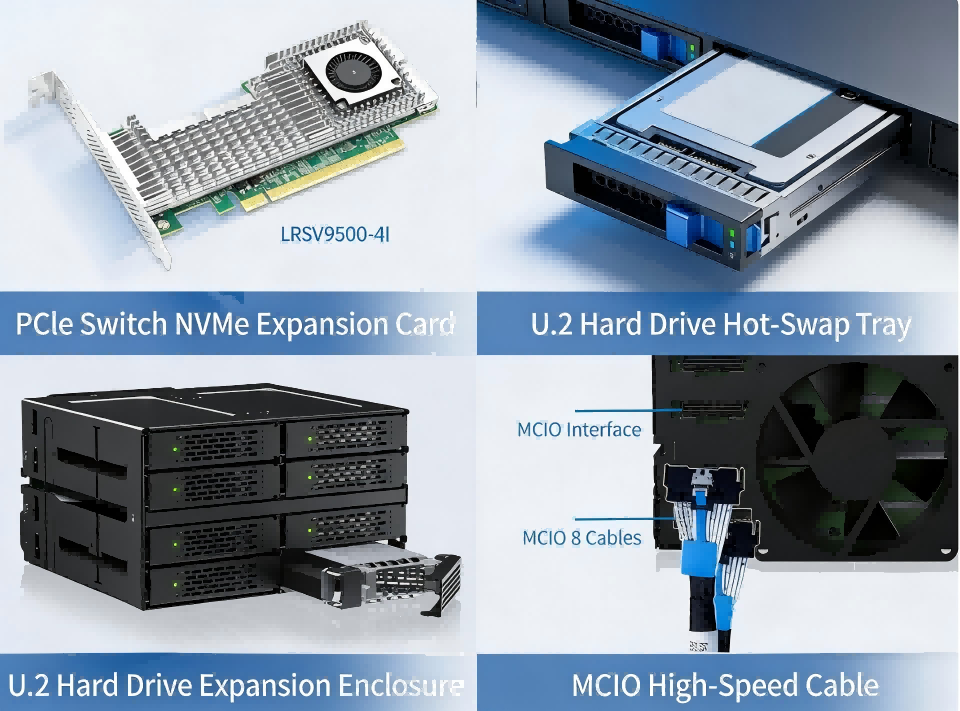
To address the above pain points, the industry-leading storage solution adopts an innovative combination of PCIe Switch hard drive expansion card + U.2 hard drive expansion enclosure + MCIO high-speed interface to realize SSD hot-swapping during road tests.
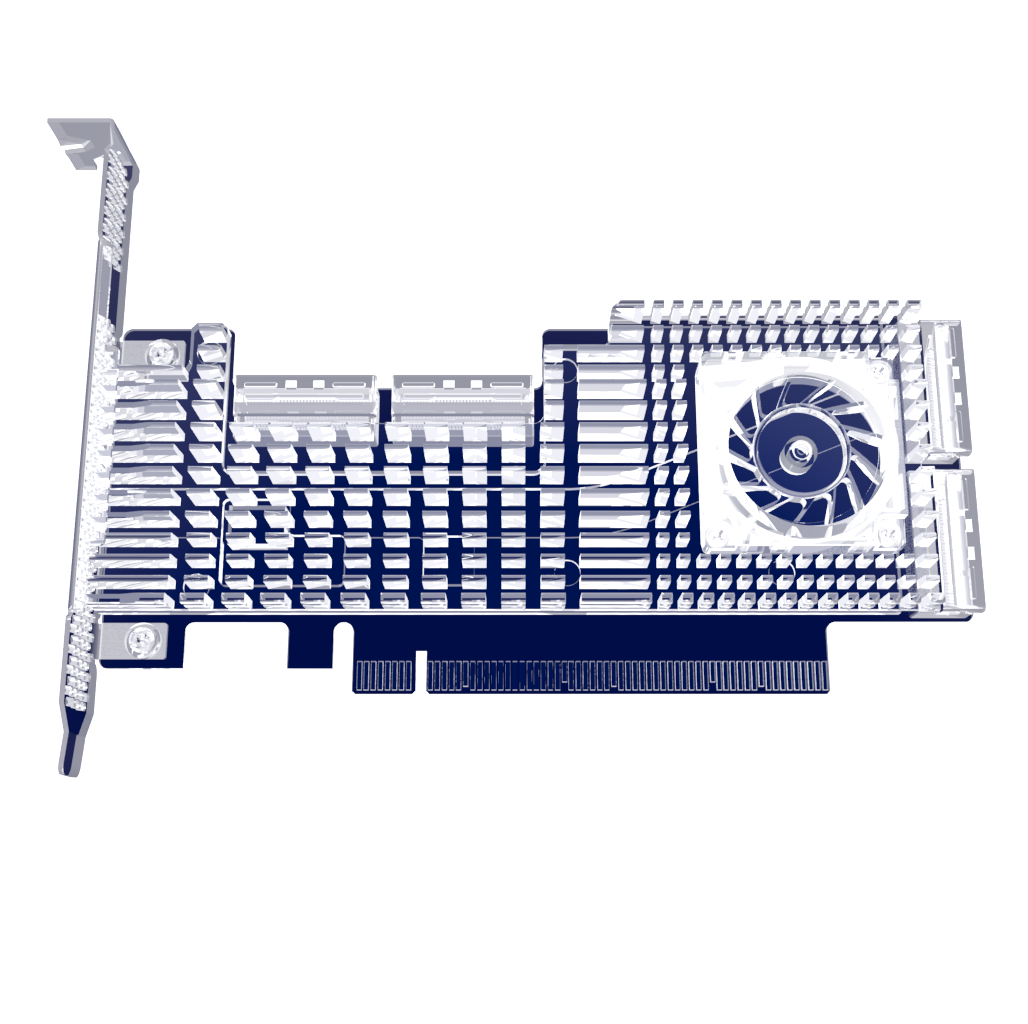
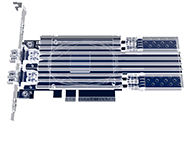
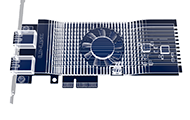
The PCIe Switch expansion card is the core hub of the entire storage system. Connected to the on-board industrial computer via a PCIe x16 slot, the card is built with a high-performance PCIe Switch chip that can expand a single PCIe port into multiple independent channels.
Highlighted technical specifications:
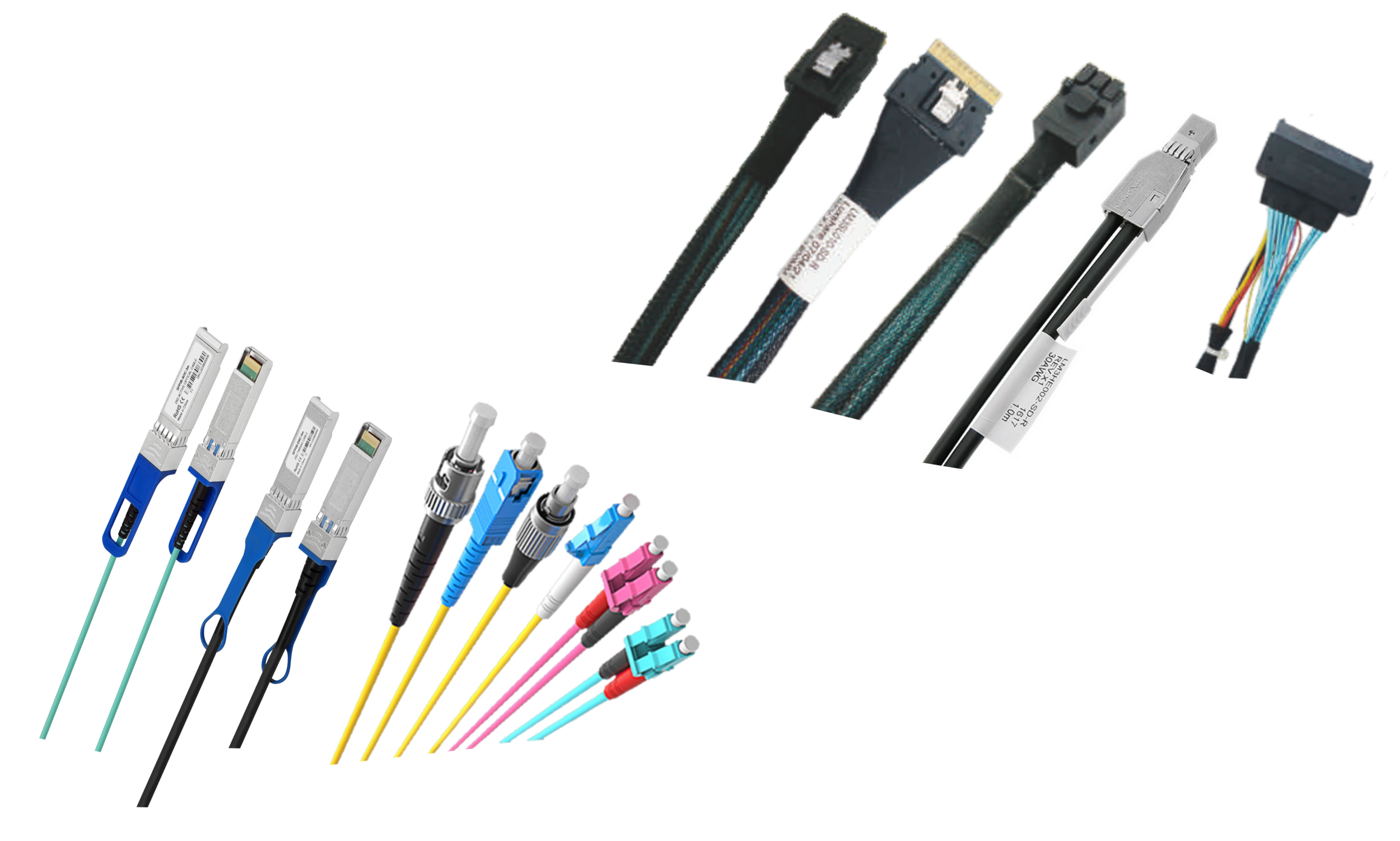
· Interface configuration: Adopts MCIO 8i (SFF-TA-1016) interface, with 4 MCIO output ports per expansion card.
· Bandwidth performance: Supports PCIe Gen5 x4 channels, with a theoretical single-port bandwidth of up to 128Gbps and backward compatibility with PCIe 4.0/3.0.
· Expansion capability: A single card can connect up to 8 U.2 NVMe SSDs to meet large-capacity storage needs.
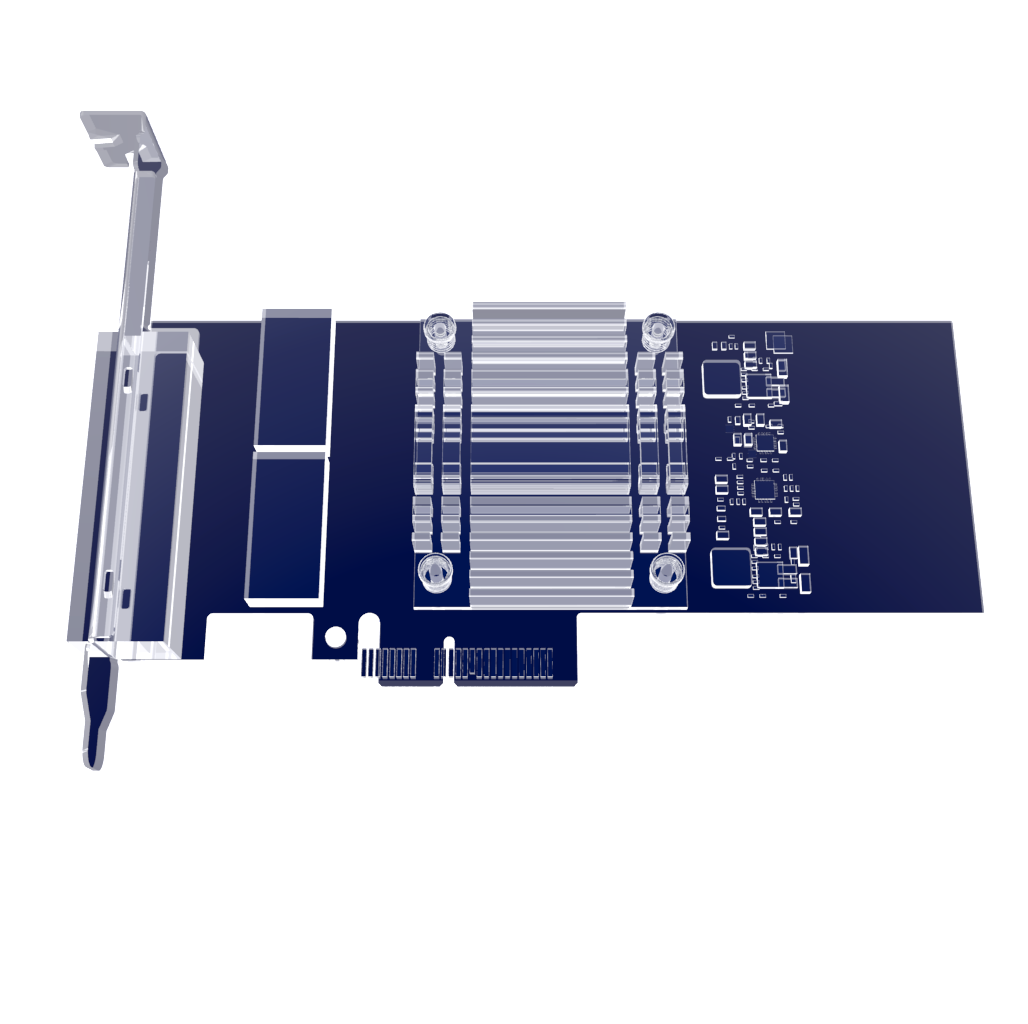
In on-board storage applications, U.2 and M.2 expansion cards each have their own advantages:U.2 expansion cards adopt the standard 2.5-inch form factor, support hot-swappable design, have a single-drive capacity of over 16TB, and are suitable for large-capacity, high-reliability enterprise-level applications. The U.2 interface is compatible with SAS/PCIe protocols and features high versatility.
SSD hot-swapping is the core innovation of this solution. With hardware-level hot-swapping support, engineers can safely replace storage media while the vehicle is in operation without stopping or shutting down the vehicle.
Hard drive hot-swapping technology relies on support at three levels:
· Hardware level: The PCIe Switch chip supports dynamic port enabling/disabling, and the U.2 hard drive backplane provides power timing control to ensure controllable current impact during plugging and unplugging.
· Firmware level: The hard drive drawer is built with a hot-swapping controller that monitors changes in drive bay status and sends device insertion/removal events to the system.
· Software level: The operating system supports NVMe device hot-swapping, and the file system can safely unmount and remount storage volumes.
3.2 Hot-Swapping Operation Process
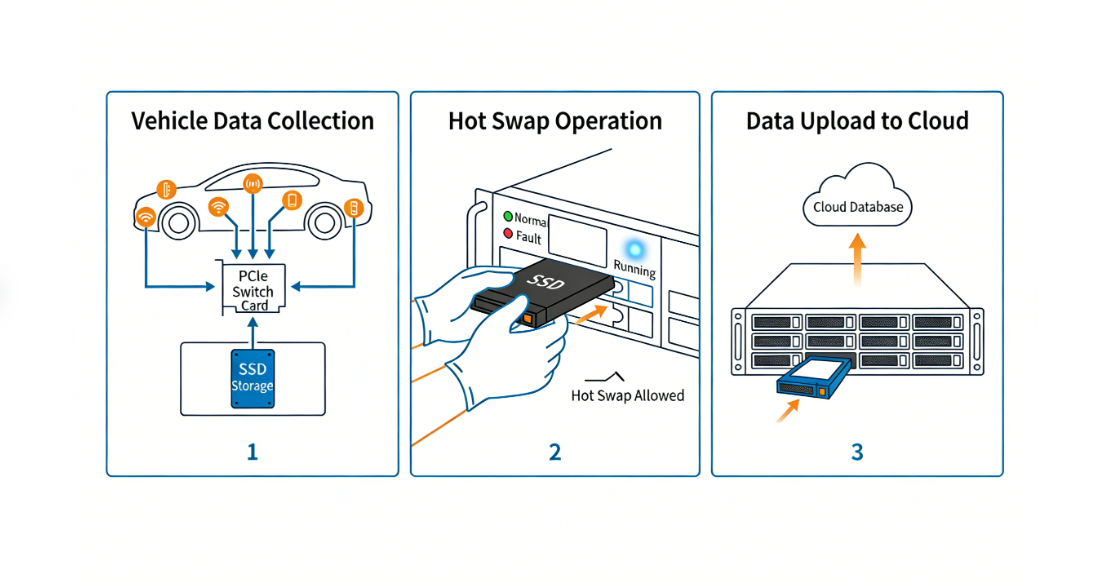
aking a road test fleet of 15 vehicles as an example, the SSD hot-swapping operation process is as follows:
Step 1: Monitoring and early warning – The system real-timely monitors the remaining capacity of each SSD and automatically issues an early warning when the storage space falls below the threshold.
Step 2: Safe unmounting – Engineers perform a safe unmount operation through the software interface, and the system completes data flushing and file system unmounting.
Step 3: Physical replacement – With the EZ-Slide drawer design, the full drive is quickly pulled out and a new one is inserted when the vehicle is driving at low speed or for a short stop, the entire process takes only a few seconds.
Step 4: Automatic recognition – After detecting the insertion of the new drive, the system automatically completes device initialization and file system mounting, and data writing resumes immediately.
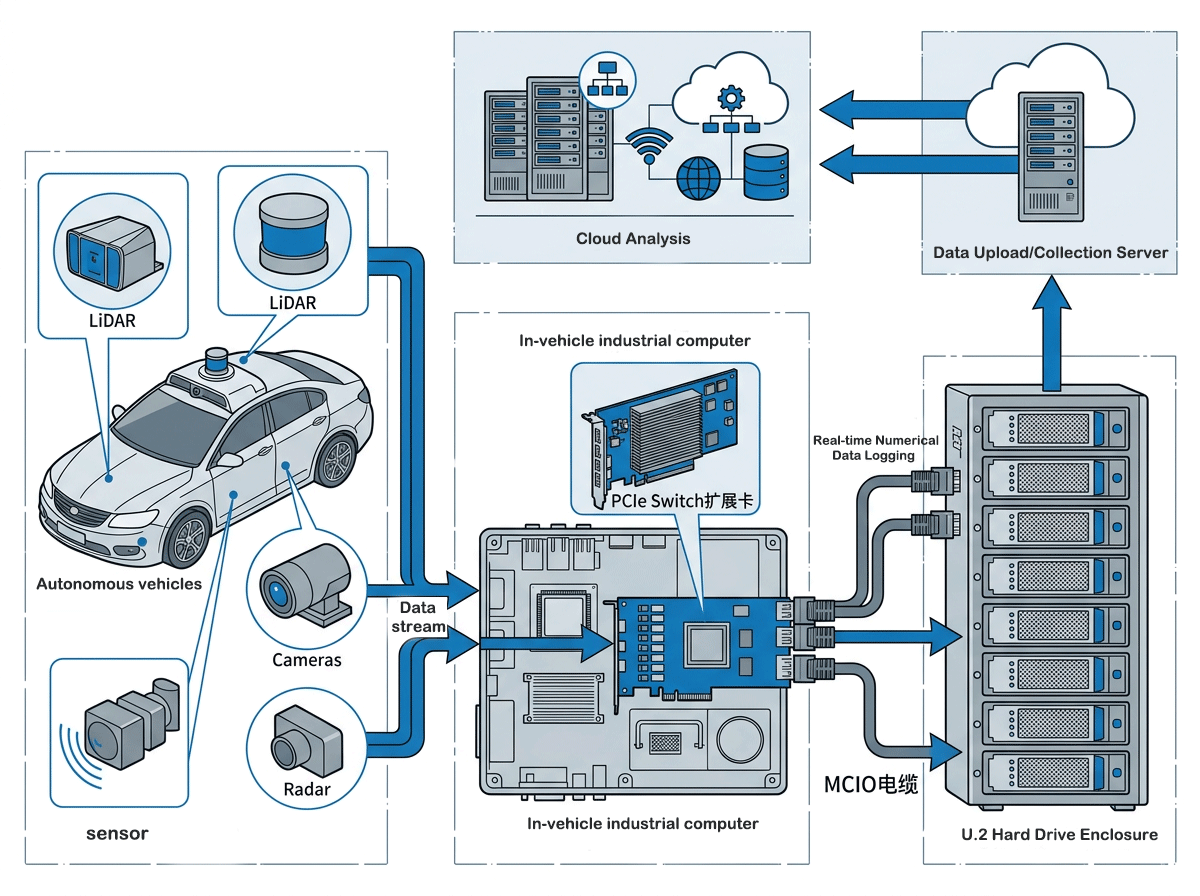
Based on the PCIe Switch hard drive expansion card and SSD hot-swapping technology, a complete intelligent driving data closed loop system is constructed:On-board data collection: 15 road test vehicles operate simultaneously, each equipped with one PCIe Switch expansion card and one 8-bay U.2 hard drive expansion enclosure. Data from LiDARs, cameras and millimeter-wave radars is written to U.2 NVMe SSDs in real time through the PCIe 5.0 high-speed channel.Hard drive replacement without stopping: When the hard drive is full, the drive is directly replaced via the hot-swapping function without interrupting the vehicle test. Compared with traditional solutions, road test efficiency is improved by more than 30%.Cloud data analysis: The replaced hard drives are inserted into local servers (24 U.2 bays) and uploaded to the cloud through a 10G network, where private algorithms run for data cleaning, scene annotation and model training.
· High-performance transmission: The PCIe Switch expansion card provides 64GB aggregated bandwidth to meet the concurrent writing needs of multi-channel sensors.
· Flexible expansion: U.2 expansion cards support large-capacity enterprise-level SSDs, with a maximum single-system storage capacity of up to 128TB.
· Hot-swapping support: The hard drive hot-swapping design enables drive replacement without stopping the vehicle, ensuring test continuity.
· Industrial-grade reliability: All-metal structure and anti-vibration design adapt to the harsh on-board environment.
· Easy maintenance: The EZ-Slide drawer design allows a single person to complete hard drive replacement operations.
Competition in the autonomous driving industry has entered the second half driven by data. The PCIe Switch hard drive expansion card, combined with U.2 expansion card and SSD hot-swapping technology, provides an efficient, reliable and scalable solution for intelligent driving data storage. With the popularization of PCIe 5.0 technology and the continuous decline in the cost of NVMe SSDs, this solution will be widely applied in more autonomous driving projects, helping enterprises build a strong data closed loop capability.
2026-03-28
2026-03-25