2026-03-24
In the era of intelligent manufacturing and Industry 4.0, machine vision has become the "intelligent eye" of industrial automated production lines. However, as the resolution of industrial cameras leaps from megapixels to tens of megapixels, traditional Gigabit networks can hardly meet the real-time transmission requirements of high-speed image data. This article will deeply explore the network transmission pain points in industrial vision inspection and how the LR-LINK LRES1053PT 10G Quad-Port Copper Ethernet Network Card provides a high-speed and stable data channel for machine vision systems.
I. Market Pain Points and Challenges of Industrial Machine Vision
In high-precision visual inspection scenarios such as PCB inspection, semiconductor packaging, and auto parts quality inspection, industrial cameras need to capture high-resolution images at a speed of tens or even hundreds of frames per second. Taking a 5-megapixel industrial camera as an example, the uncompressed image data volume of a single frame is about 15MB. When multiple cameras capture images synchronously, the bandwidth of traditional Gigabit network cards (1Gbps) quickly becomes a system bottleneck.
Market data shows that more than 60% of machine vision systems suffer from frame loss to varying degrees, with insufficient network bandwidth being the primary cause. When multiple GigE Vision cameras work simultaneously, data packet loss caused by network congestion directly affects inspection accuracy and production efficiency.
Modern industrial inspection lines usually deploy 4 to 8 industrial cameras for multi-angle and all-round inspection. Taking 4 10-megapixel cameras as an example, the theoretical bandwidth required at a sampling frame rate of 10fps is:4 cameras × 30MB/frame × 10fps = 9.6Gbps
This data is close to the physical limit of Gigabit networks, while 10G Ethernet technology can provide sufficient bandwidth margin to ensure the stable operation of multi-camera systems.
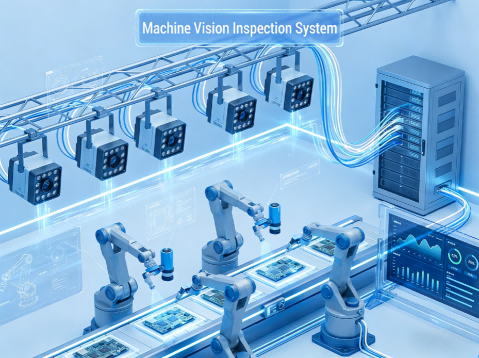
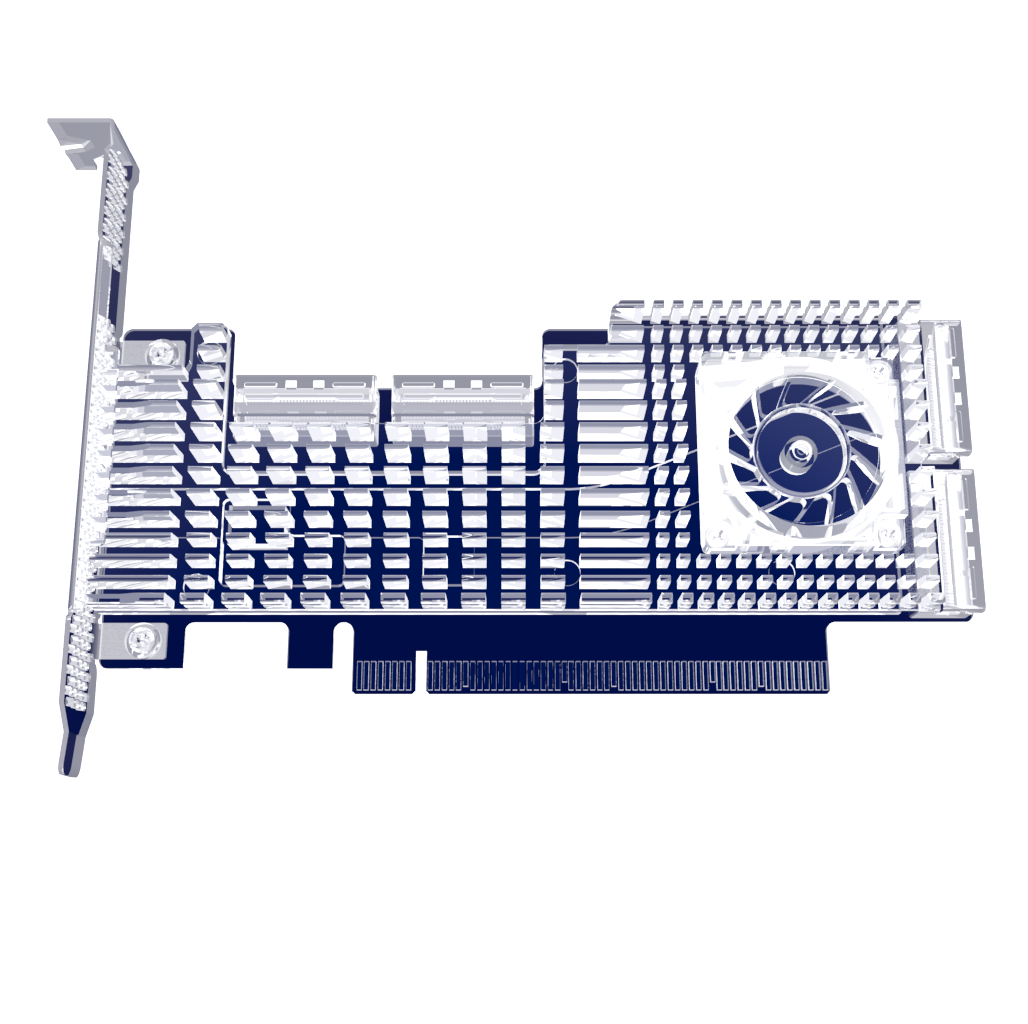
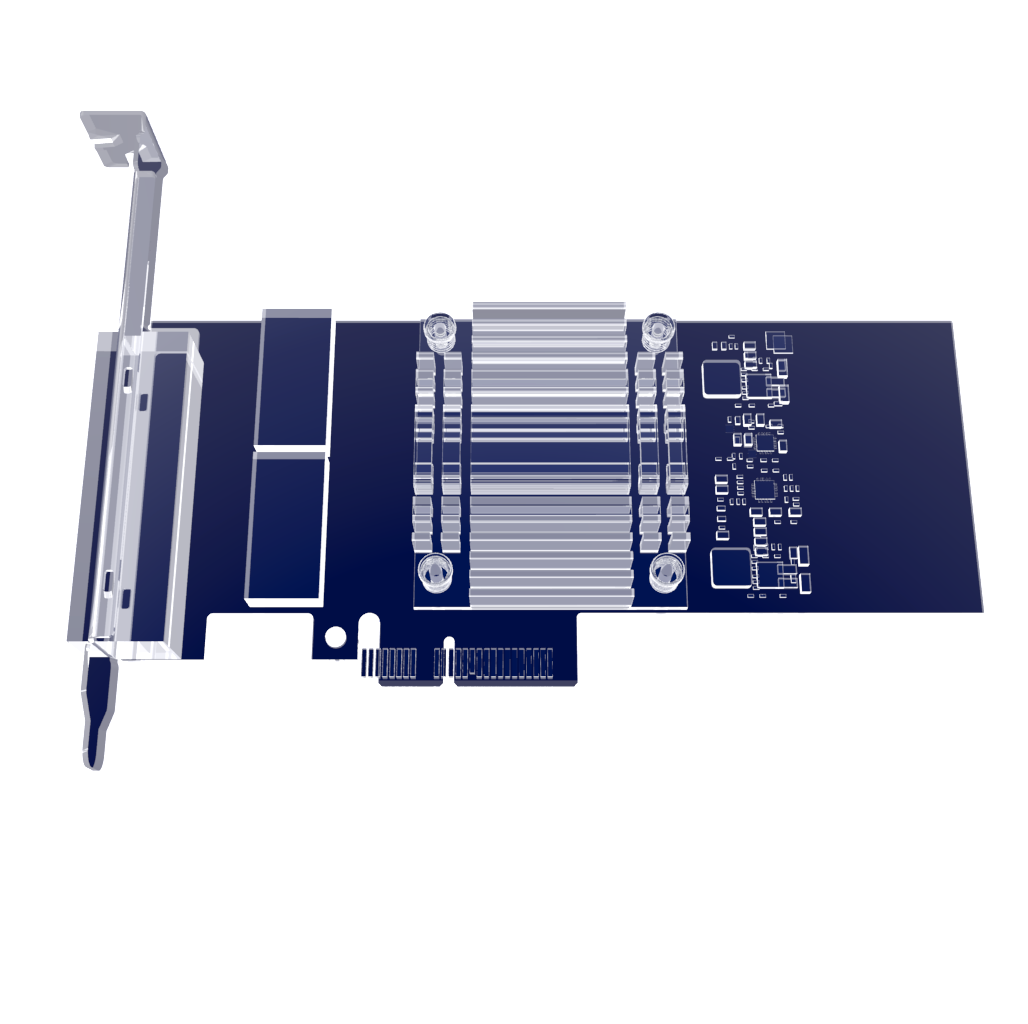
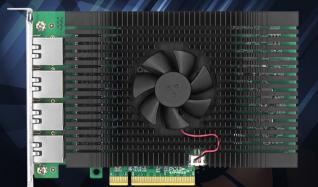
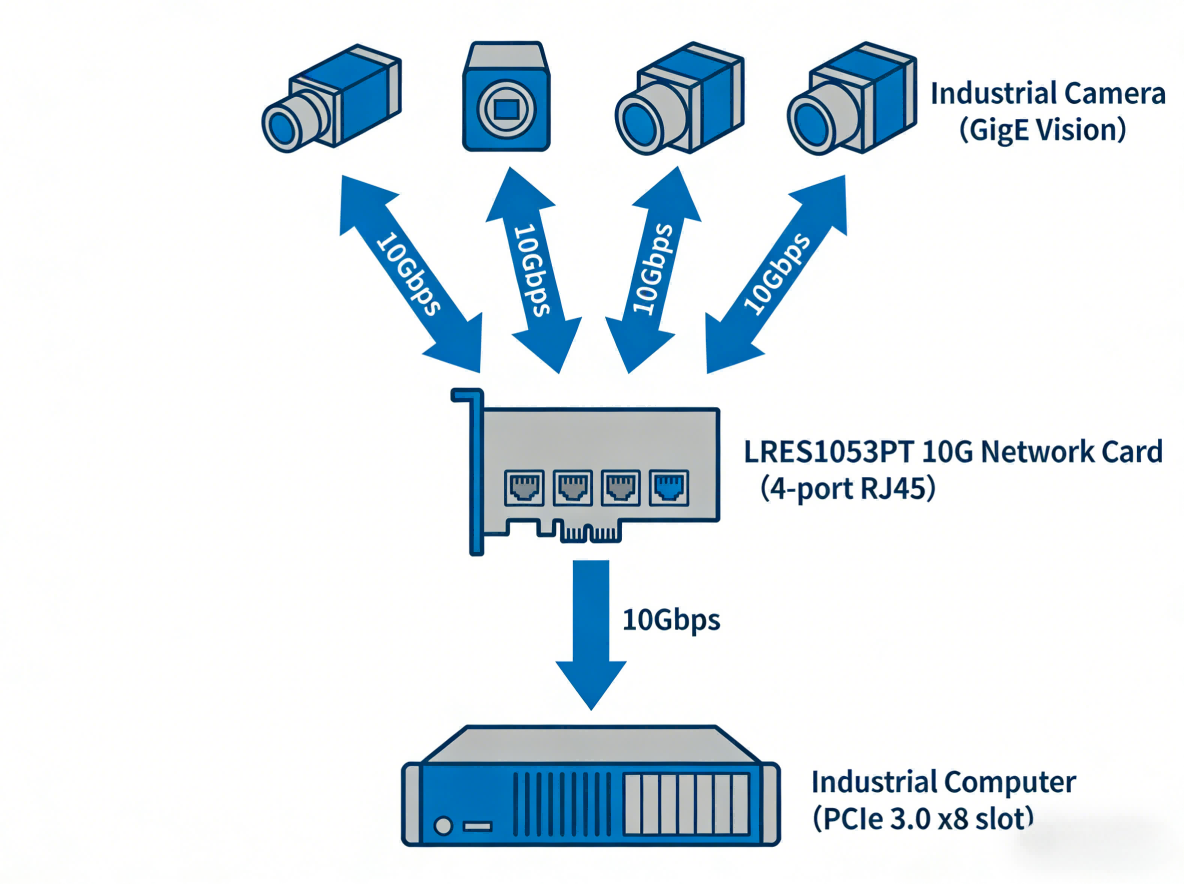
The LRES1053PT is a PCIe 3.0 x8 quad-port copper 10G Ethernet network card independently developed by Shenzhen Linkreal Electronics Co., Ltd. based on the Aquantia AQtion AQC113 controller solution. This product has been deeply optimized for industrial automation and machine vision application scenarios:
· Quad-port 10Gbps high-speed transmission: The single card is equipped with 4 10G RJ45 ports with a total bandwidth of 40Gbps, which can connect 4 10GigE industrial cameras.
· Multi-rate adaptation: Supports six rates of 10M/100M/1G/2.5G/5G/10Gbps, compatible with various industrial cameras.
· Jumbo Frames support: Max 16KB Jumbo Frames supported, reducing CPU overhead and improving transmission efficiency.
· PXE and UEFI support: Supports network boot and diskless workstation deployment, simplifying system maintenance.
· IEEE 1588 PTP Precision Time Protocol: Realizes nanosecond-level synchronous acquisition of multiple cameras.
The LRES1053PT adopts a PCIe 3.0 x8 interface design with a theoretical bandwidth of 64Gbps, providing sufficient PCIe bandwidth margin for the 4-port 10G network. Compared with the traditional PCIe x4 solution, the x8 interface can effectively avoid bandwidth bottlenecks at the PCIe level and ensure the smooth transmission of high-speed network data.
III. Application Scenarios and Solutions
In PCB AOI (Automated Optical Inspection) systems, multiple high-resolution cameras need to be deployed for defect detection of circuit boards. The 4-port design of LRES1053PT can directly connect 4 10GigE cameras, and the independent 10Gbps bandwidth of each channel ensures real-time transmission of image data, avoiding data congestion problems in traditional shared bandwidth solutions.
Semiconductor wafer inspection has extremely high requirements for image resolution and transmission stability. LRES1053PT supports the IEEE 1588 PTP protocol, which can realize precise synchronous acquisition of multiple cameras and ensure the accuracy of wafer surface defect detection. At the same time, the support for 16KB Jumbo Frames can reduce the CPU interrupt frequency and improve the overall processing efficiency of the system.
In PCB AOI (Automated Optical Inspection) systems, multiple high-resolution cameras need to be deployed for defect detection of circuit boards. The 4-port design of LRES1053PT can directly connect 4 10GigE cameras, and the independent 10Gbps bandwidth of each channel ensures real-time transmission of image data, avoiding data congestion problems in traditional shared bandwidth solutions.
Semiconductor wafer inspection has extremely high requirements for image resolution and transmission stability. LRES1053PT supports the IEEE 1588 PTP protocol, which can realize precise synchronous acquisition of multiple cameras and ensure the accuracy of wafer surface defect detection. At the same time, the support for 16KB Jumbo Frames can reduce the CPU interrupt frequency and improve the overall processing efficiency of the system.
3.3 Online Inspection of Auto Parts
The working environment of auto parts production lines is complex, with strict requirements for the stability of network equipment. LRES1053PT adopts an industrial-grade design with an operating temperature range of 0°C to 50°C, supports copper cable connection, and has strong anti-interference ability, making it suitable for deployment in factory workshop environments.
The LRES1053PT features excellent system compatibility and supports mainstream operating systems:
· Windows Platform: Windows 10/11, Windows Server 2022
· Linux Platform: RHEL/CentOS 7.3-8.3, Ubuntu 16.04-20.04
· Domestic Operating Systems: UnionTech UOS, Kylin OS, Founder Tech
· Real-time Systems: Supports multiple real-time Linux kernel versions
With the continuous improvement of industrial camera resolution and the continuous expansion of machine vision application scenarios, 10G Ethernet has become an inevitable choice for industrial automation network infrastructure. The LR-LINK LRES1053PT 10G quad-port copper Ethernet network card provides a reliable data transmission solution for machine vision systems with its characteristics of high bandwidth, low latency and strong compatibility, helping manufacturing enterprises realize intelligent transformation and upgrading.
2026-03-25
2026-03-20