2026-03-25
With the continuous rise of labor costs and increasingly stringent safety production requirements, manufacturing enterprises are accelerating the pace of automation transformation. As a core technology of industrial automation, machine vision is replacing a large number of manual inspection positions. However, the network infrastructure of vision systems is often overlooked, becoming a hidden bottleneck restricting overall efficiency. This article will explore how to achieve the dual goals of cost reduction, efficiency improvement and occupational safety by deploying high-speed industrial Ethernet network cards.
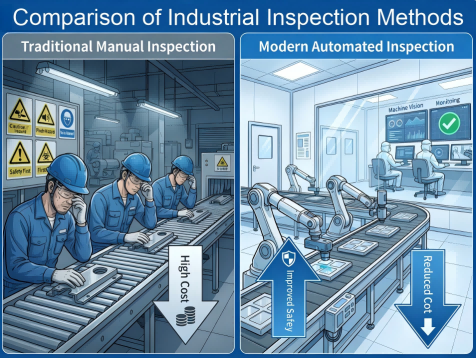
Statistics show that labor costs in China's manufacturing industry have increased by more than 200% over the past decade. In the quality inspection link, traditional manual inspection requires a large number of skilled workers, and inspection efficiency is significantly affected by fatigue. Taking an electronic manufacturing enterprise as an example, a medium-sized SMT production line usually needs to be equipped with 8 to 12 quality inspectors, with an annual labor cost of more than one million yuan.
Manual inspection positions have multiple occupational health risks: decreased eyesight caused by long-term visual inspection, musculoskeletal diseases induced by repetitive movements, and potential harm from contact with hazardous chemicals (such as PCB cleaning solvents). In addition, the high-speed operating production line equipment also poses a threat to the personal safety of operators.
Many enterprises continue to use traditional Gigabit network infrastructure when deploying machine vision systems, leading to problems such as data packet loss and image delay in the scenario of high-frame-rate acquisition with multiple cameras. This not only affects inspection accuracy, but may also cause missed inspections and false inspections, bringing quality risks and economic losses.
II. LRES1053PT: The Core Component for Building an Efficient Visual Inspection Network
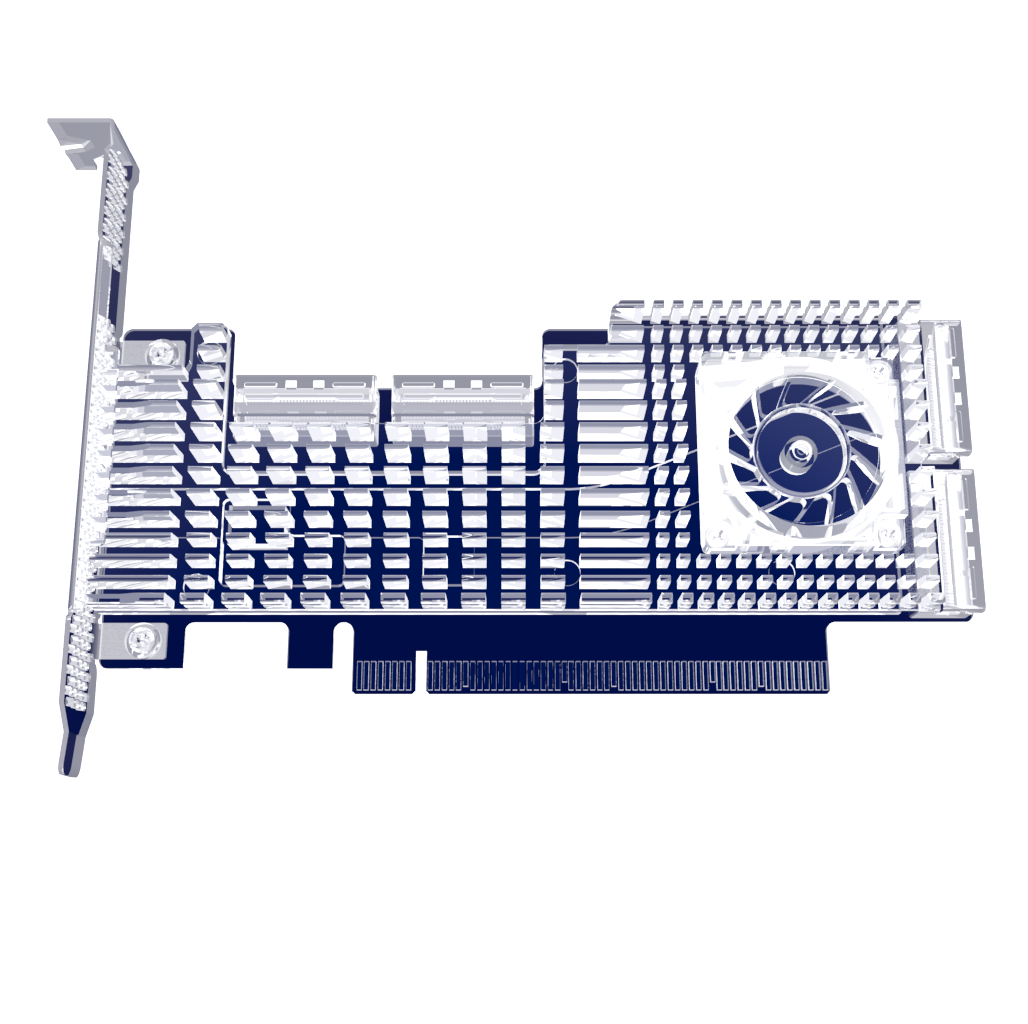
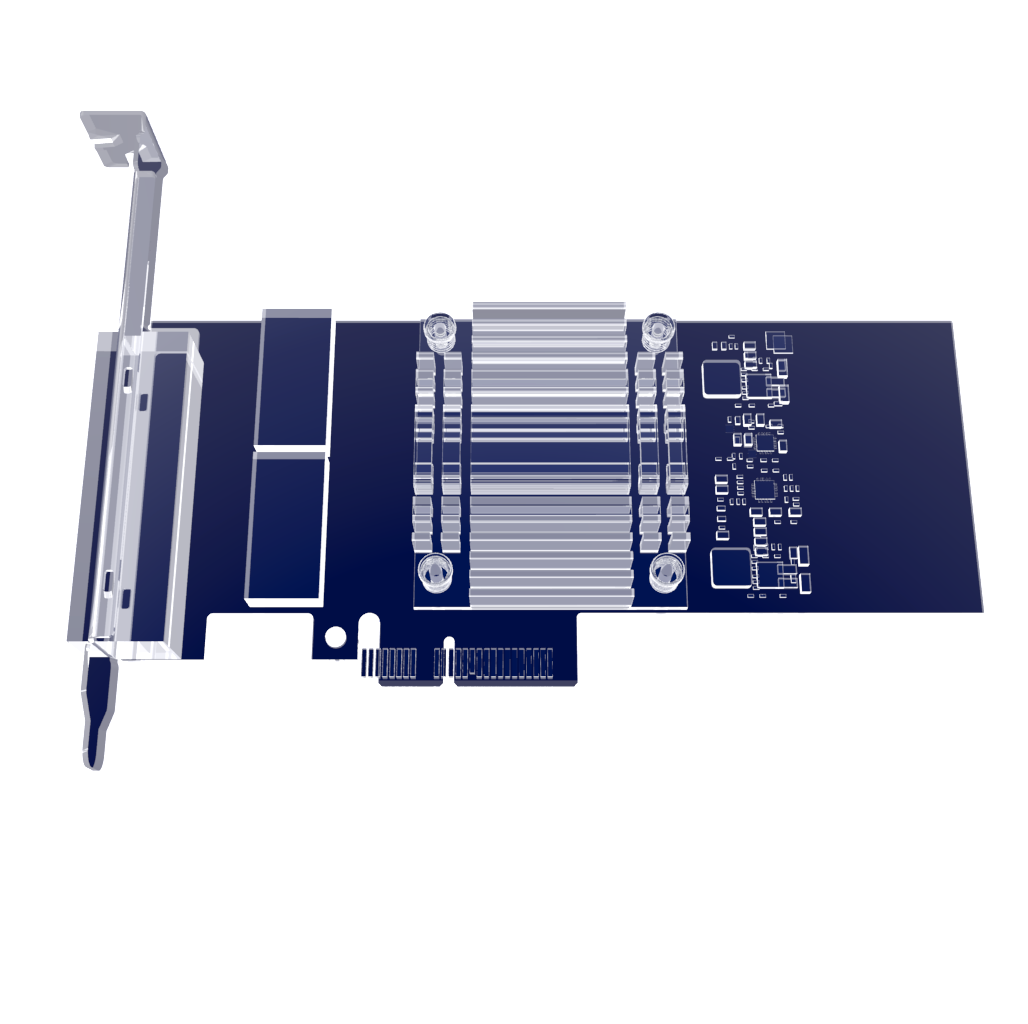
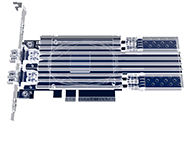
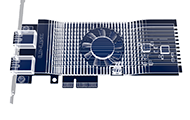
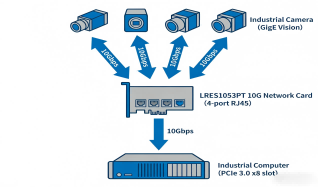
LRES1053PT is a PCIe 3.0 x8 quad-port copper 10G Ethernet network card specially designed by Linkreal Electronics for industrial automation scenarios. Based on the high-performance Aquantia AQC113 chip controller, this network card provides a high-bandwidth, low-latency and high-reliability network connection solution for machine vision systems.
LRES1053PT provides solid technical support for manufacturing enterprises to achieve the goals of cost reduction and efficiency improvement through the following technical features:
· High-density port design: 4 x 10G ports on a single card, allowing an industrial computer to connect more cameras and reducing the waste of PCIe slot resources.
· Jumbo Frames support: 16KB Jumbo Frames reduce CPU load and release computing resources for image analysis and processing.
· Multi-rate compatibility: Supports six rates from 10M to 10G, protecting existing investments and enabling smooth upgrades.
· Stability and reliability: Industrial-grade design for 7×24-hour stable operation, reducing maintenance costs.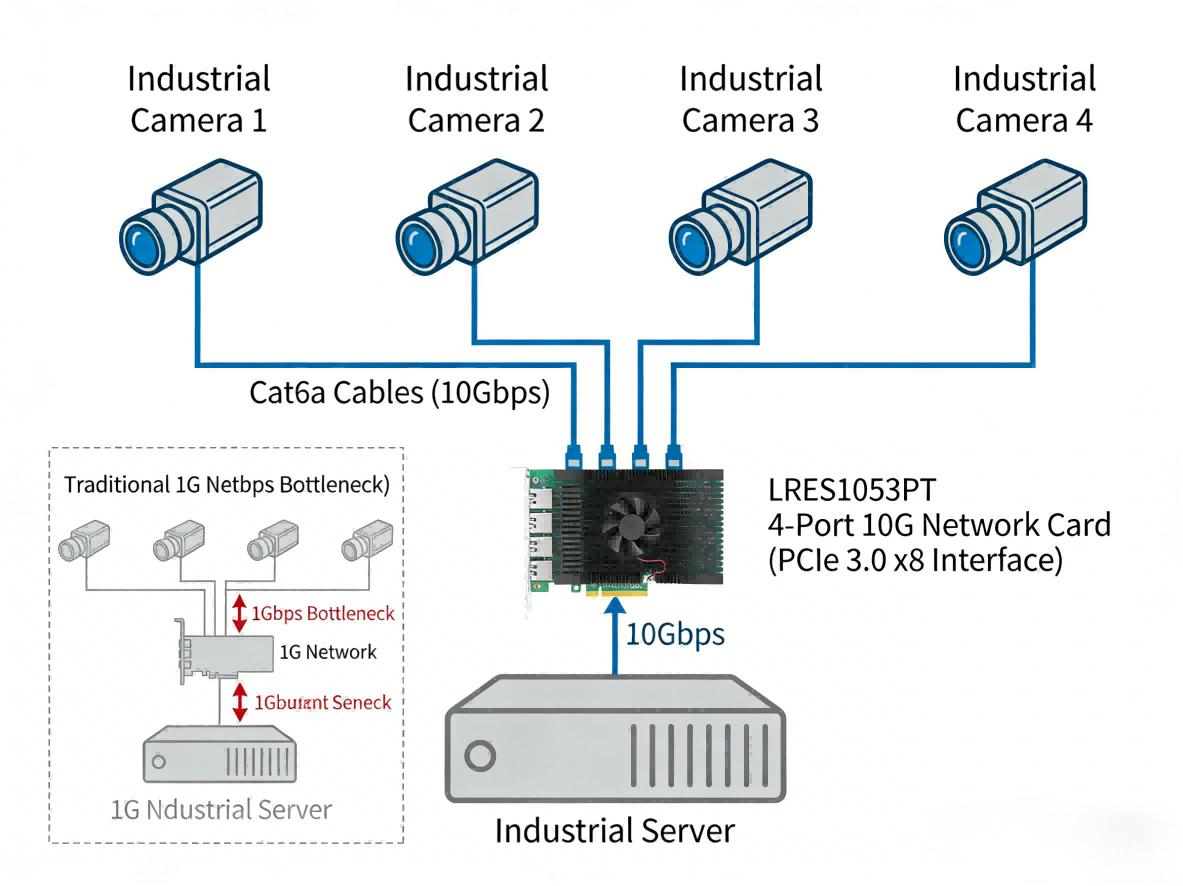
In the AOI inspection link after SMT chip mounting, the deployment of LRES1053PT can connect 4 high-resolution cameras to realize synchronous inspection of the front and back of PCBs. Compared with traditional solutions, the inspection efficiency is increased by 300%, the missed inspection rate is reduced to below 0.1%, and the demand for quality inspection manpower is reduced by 80% at the same time.
The food packaging industry has strict requirements for foreign object detection. After adopting the 10G vision system, it can real-timely detect problems such as packaging tightness, label integrity and foreign object mixing on high-speed production lines, with an inspection speed of more than 600 pieces per minute, far exceeding the limit of manual inspection.
The inspection of dimensional accuracy and surface quality of auto parts has extremely high requirements for network stability. The IEEE 1588 PTP synchronization function of LRES1053PT ensures the timing consistency of multiple cameras when working collaboratively, providing a reliable data foundation for precision measurement.
Taking a medium-sized electronic production line as an example, the comprehensive benefits of manual inspection and 10G visual automatic inspection solutions are compared as follows:
Return on investment period: 12-18 months
The main sources of benefits include:
· Labor cost savings: Reducing 8-10 quality inspectors, saving about 800,000-1,000,000 yuan in annual labor costs.
· Reduction in quality losses: The missed inspection rate is reduced from 2-3% in manual inspection to below 0.1%, reducing the costs of rework and customer complaints.
· Improvement in production efficiency: The inspection speed is increased by 3-5 times, and the overall OEE of the production line is increased by 15-20%.
· Occupational safety cost savings: Reducing the risk of industrial injuries and cutting down the expenditure on safety training and insurance.
Automated visual inspection not only brings economic benefits, but also creates a safer working environment and more valuable positions:
· Eliminating repetitive strain injuries: Workers shift from monotonous visual inspection to equipment monitoring and abnormal handling.
· Staying away from dangerous areas: Vision systems replace manual labor to work in high-temperature, high-noise and toxic and harmful areas.
· Skill improvement channels: Original quality inspectors can be transferred to vision system operation and maintenance engineers to get higher salaries.
· Human-machine collaboration mode: AI-assisted decision-making improves work quality and reduces the pressure of human errors.
To give full play to the performance advantages of LRES1053PT, it is recommended to match the following infrastructure:
· Industrial computer: Equipped with an industrial computer with PCIe 3.0 x8 or higher specification slots.
· Network cable: Shielded network cable of Cat6a or higher specification to ensure stable transmission of 10G signals.
· Switch: Industrial Ethernet switch supporting 10GBASE-T.
In the wave of transformation and upgrading of intelligent manufacturing, the importance of network infrastructure has become increasingly prominent. The LR-LINK LRES1053PT 10G quad-port copper Ethernet network card provides a high-performance and high-reliability network connection solution for machine vision systems, helping manufacturing enterprises achieve the comprehensive goals of cost reduction, efficiency improvement, quality enhancement and safety assurance.
Choosing the right network infrastructure is a key step for the success of industrial automation projects. With its outstanding performance and reliability, LRES1053PT is becoming the preferred solution for more and more manufacturing enterprises.